Power generation from Lake Kivu
Research group: professor Andy Woods
The Problem
Lake Kivu, at the border of Rwanda and DRC, contains large amounts of dissolved methane. Methane extraction activities might stress the lake water ecosystem.
Work Needed
New, fundamental understanding of the water flows which develop in the lake is needed, in order to optimise the methane extraction activities and quantify the risk of a lake overturning event.
Our Work
We are developing new laboratory and theoretical models of the mixing of the lake water produced while extracting methane at depth.
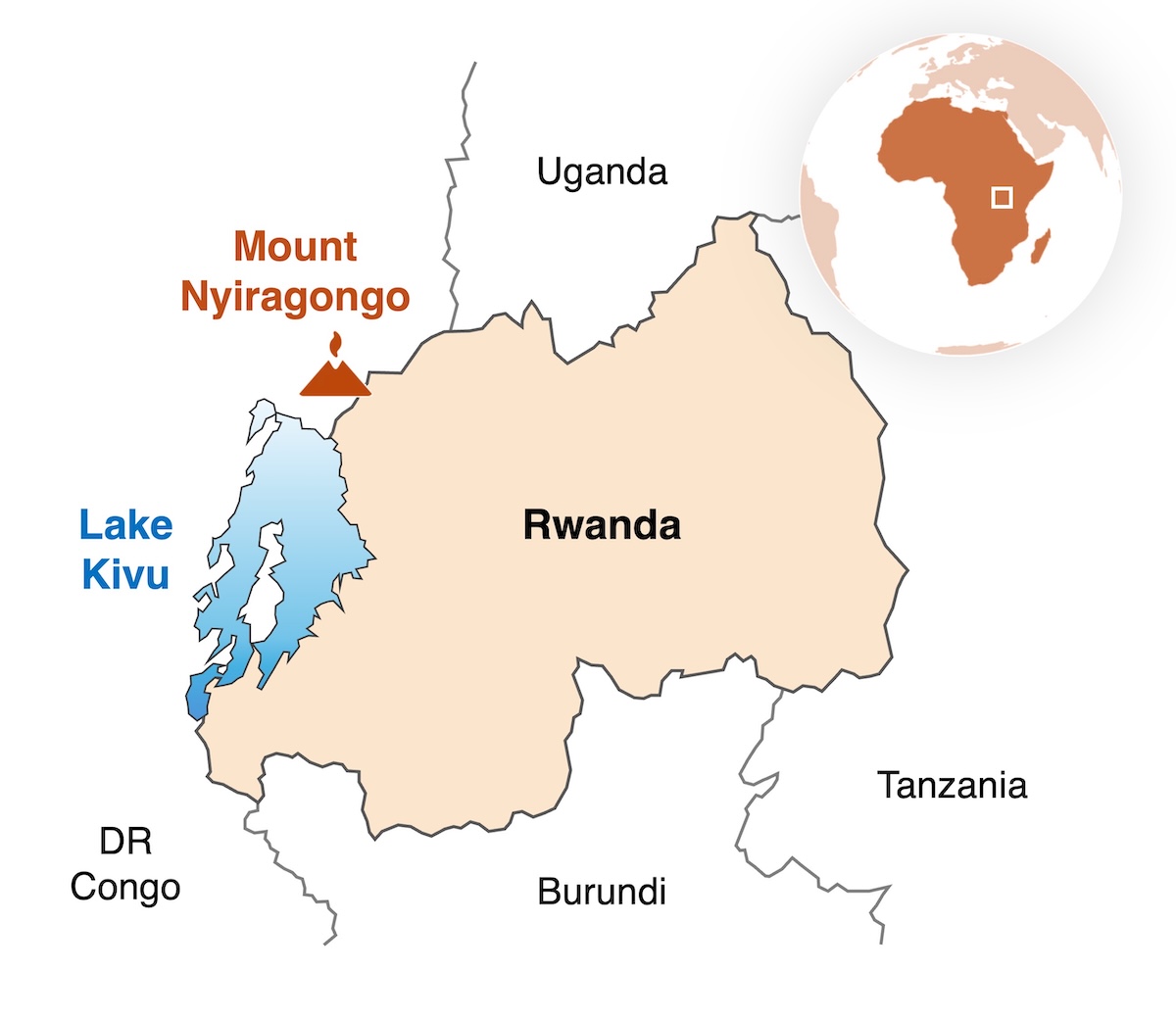
Lake Kivu waters are rich in dissolved methane and carbon dioxide
Background
Lake Kivu is located on the border of Rwanda and the Democratic Republic of Congo, along the western branch of the East African Rift, a region of active volcanism and high seismicity. The lake spans nearly 2400 square km and contains nearly 60 cubic km of methane and over 300 cubic km of carbon dioxide, dissolved in the deep and saline lake waters. Methane from Lake Kivu is extracted for electricity production and represents a very significant fraction of the power used in the region.
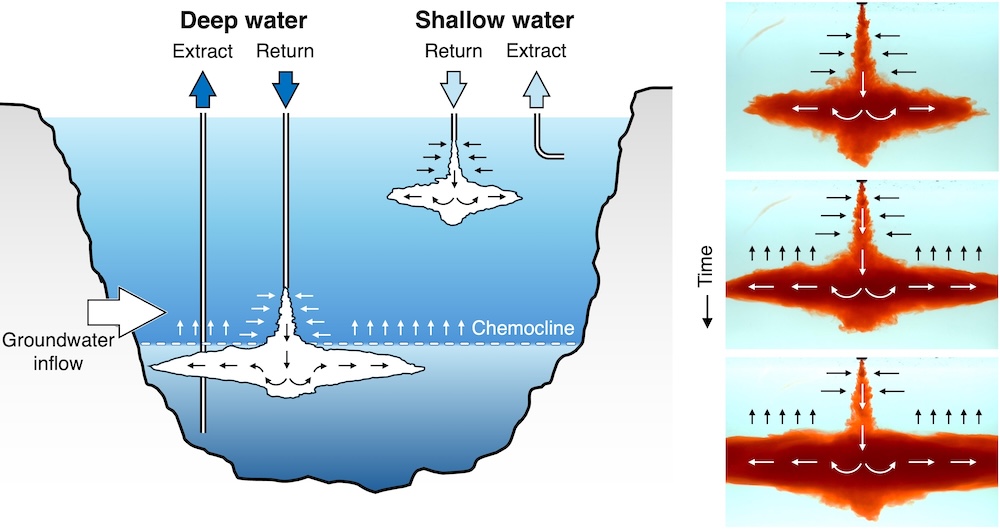
Laboratory experiments are being developed to investigate the flows in the lake
Our Work
A new research project is ongoing at the Institute to investigate the flows which develop in the lake as a result of the methane extraction activities, with the aim of ensuring that these activities do not degrade and stress the lake water ecosystem.
We are also developing new quantitative understanding of the risks and likelihood of a lake overturn event, leading to a major release of the dissolved gases, perhaps triggered by an eruption of the nearby and active Nyiragongo Volcano.