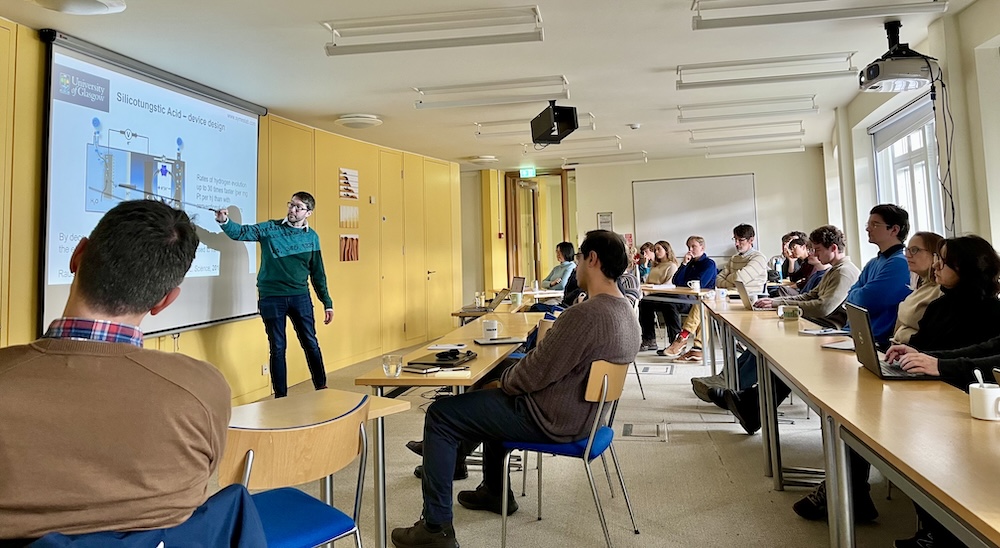
Decoupling strategies in electrochemical water splitting

The storage of renewably-generated energy as hydrogen via the electrolysis of water is a fundamental cornerstone of a sustainable hydrogen economy. Conventional electrolysers usually require stable power inputs in order to operate effectively and safely and so may be unsuited to harnessing renewable power, which is often intermittent and diffuse. Professor Mark Symes, from the

On the thermal drift of an ATES system subject to different heating and cooling loads

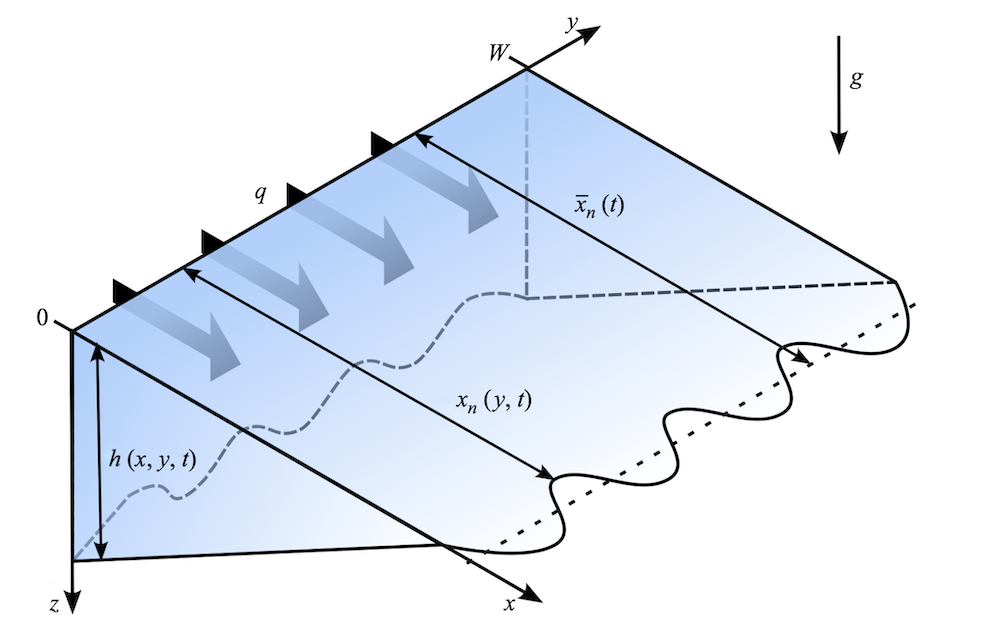
Aquifer thermal energy storage systems can provide a heat source in the winter by extracting warm water from a subsurface reservoir. The extracted fluid cools as it passes through a heat exchanger and is then injected into a colder aquifer. The cold fluid can provide a source of cooling in the summer, absorbing heat rejected

Coupling rheology and segregation in granular flows

During the last fifteen years there has been a paradigm shift in the continuum modelling of granular materials, most notably with the development of rheological models, but also with significant advances in theories for particle segregation. Professor Nico Gray from the University of Manchester has developed new theoretical and numerical frameworks which couple granular flows

Decarbonisation of Industrial Clusters

Professor Joe Howe is the Net Zero Professor at the University of Lincoln and the academic lead for the Humber Industrial Cluster. The Humber Cluster spans both banks of the Humber Estuary, connected by the Humber Bridge and hosting the ports of Goole, Grimsby, Hull, Immingham and Killingholme. £18 bn of the UK’s economy is

Particle-driven convection

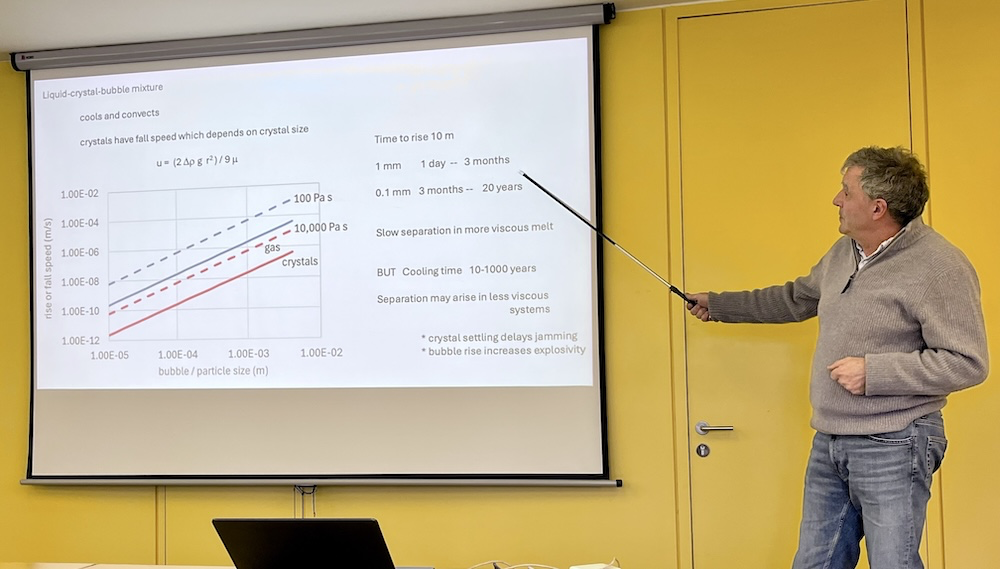
Particle-driven convection occurs when a layer of fluid containing dense particles is located above a layer of clear, particle-free fluid. This can drive a variation on the classical Rayleigh-Taylor instability, where the particles induce the density difference between the layers. Variants of this instability occur in a number of geophysical flows, such as the undersides

Challenges of the Energy Transition

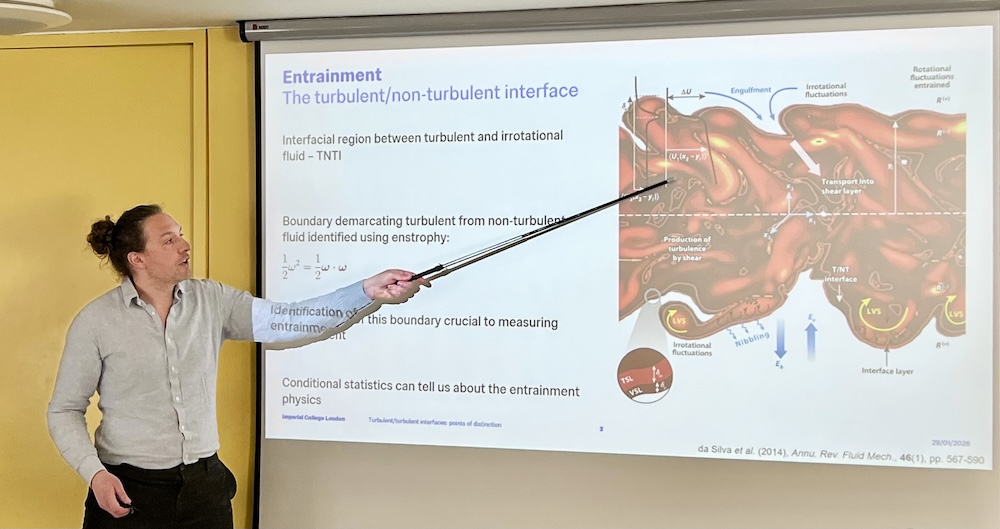
Ten years ago, the Paris COP conference heralded an exceptional meeting to tackle climate change, backed by science, and soon embraced by industry. Much has been achieved, particularly in electrification through the explosive growth of renewables and EVs. However, the original optimism now risks stalling in much of the world as the reality of displacing

Large-scale energy storage in salt caverns

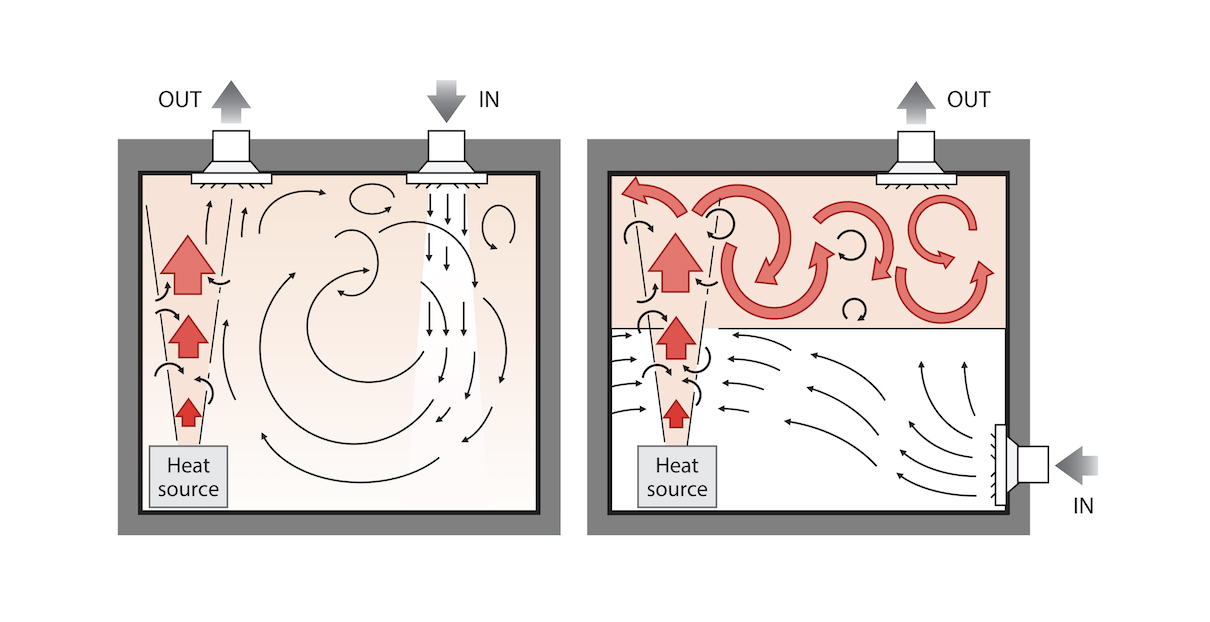
Large-scale storage technologies are crucial to balance consumption and intermittent production of renewable energy. At times of excess production, some renewable energy might be converted into compressed air or hydrogen, which is then stored in underground salt caverns. The energy is recovered later, when renewable production becomes insufficient.  Herminio Tasinafo Honorio, from Delft University of

Multiscale models for ocean-atmosphere exchanges

Wave breaking occurs at the ocean surface at moderate to high wind speeds, with significant impacts on the transfer of momentum, energy and mass between the ocean and the atmosphere. When waves break, the water surface overturns: this generates bubbles and sea spray and largely enhances the gas exchange.  Stéphane Popinet, from the Institut d’Alembert

On the growth of chemical gardens

Chemical gardens are self‑assembled structures of semi‑permeable precipitates. They attract significant interest due to their relevance to sub‑oceanic hydrothermal vents and the origin of life. A group of researchers including PhD student Mingchuan Zheng and professor Alex Routh have run new experiments to investigate the growth behaviour of chemical garden walls in a horizontal Hele‑Shaw