Forecasting volcanic eruptions

Volcanic eruptions threaten more than one in ten people worldwide, with the greatest risk at volcanoes reawakening after long quiescence. In these settings, eruptions are often explosive and nearby communities may be unprepared.  After obtaining his PhD at IEEF, Dr Eric Newland has been working on the NERC-funded project “FEVER: Forecasting Eruptions at Volcanoes after

Royal Society report: Unlocking thermal energy

Developing systems to capture, store and reuse the vast amounts of waste heat generated through industry could be a huge opportunity for the UK to strengthen its industrial competitiveness and reduce operational costs for businesses, as well as accelerate progress towards net zero. Industrial heating accounts for around 14% of UK emissions, yet approximately half

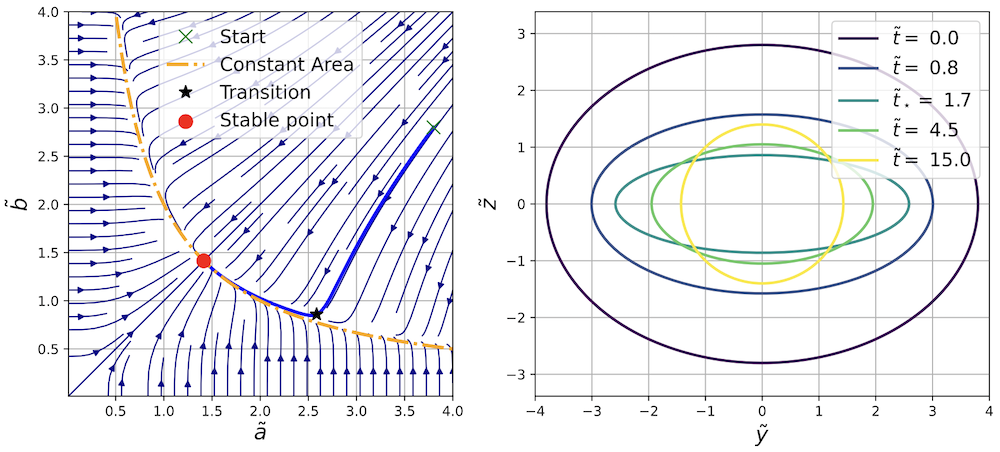
Entrainment across turbulent interfaces

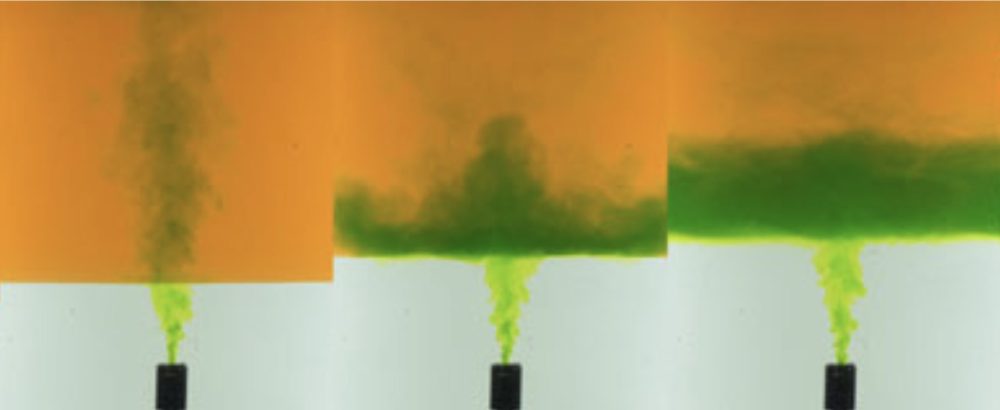
Turbulent flows are known to broaden with downstream distance, owing to the entrainment and mixing of ambient fluid into the flow. In the special case where the background is non-turbulent, the entrainment across the interface between the turbulent flow and the non-turbulent ambient is driven by viscous diffusion of the turbulent fluid into the ambient. 

Fluid Mechanics for Green Buildings

Decarbonisation of buildings is one of the main challenges for the energy transition. In particular, the provision of heating, cooling, and ventilation to maintain a comfortable and healthy interior environment can be very energy intensive. Three approaches to help with the decarbonisation of buildings are: (a) upgrading the building envelope, especially the insulation, to reduce

Multiphase flows in volcanic systems

This week’s scheduled speaker, Angus Fotherby, was unwell and could not give the first seminar of the new year. We wish him a quick recovery and hope he will be able to return before the end of term to tell us about Chromium contamination and remediation in India. Today, professor Andy Woods discussed a number

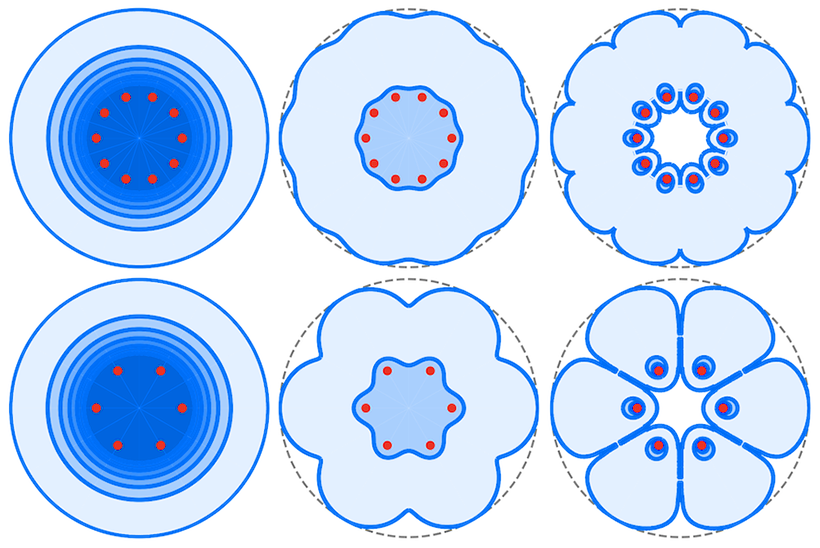
Effects of permeability perturbations in porous media flow

One of the challenges with modelling subsurface flows is the uncertainty in measurements of geological properties, mostly due to limited resolution in observation methods. Typically, the observations of subsurface systems have a resolution of order 1 m, and this leaves a large amount of uncertainty in the small-scale variation in properties such as permeability. Many

Plumes of settling and dissolving particles

In small rocky planets, the interplay between pressure and temperature profiles may cause the iron-rich liquid core to solidify from the outer boundary inward. As pure iron crystals form, they are denser than the surrounding liquid mixture. Consequently, they sink into the core before remelting at greater depth due to the increasing temperature. This process

2025 Energy Masterclass

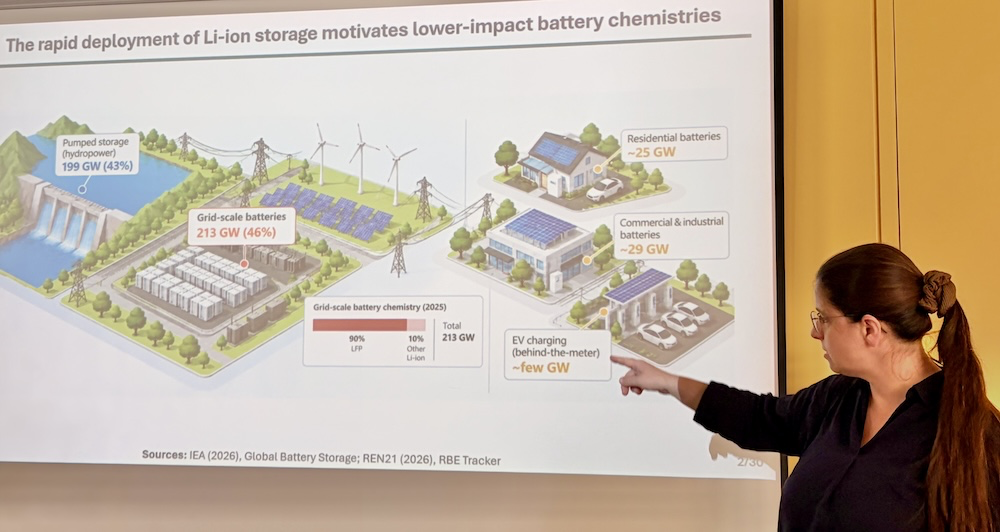
The Cambridge Energy Masterclass was a two-day intensive meeting of lectures and discussions, with talks from leading experts in various aspects of energy demand and supply. It focussed on the energy transition and the technologies needed to optimise new energy systems. We discussed the current energy system, and the different contributions provided by a number

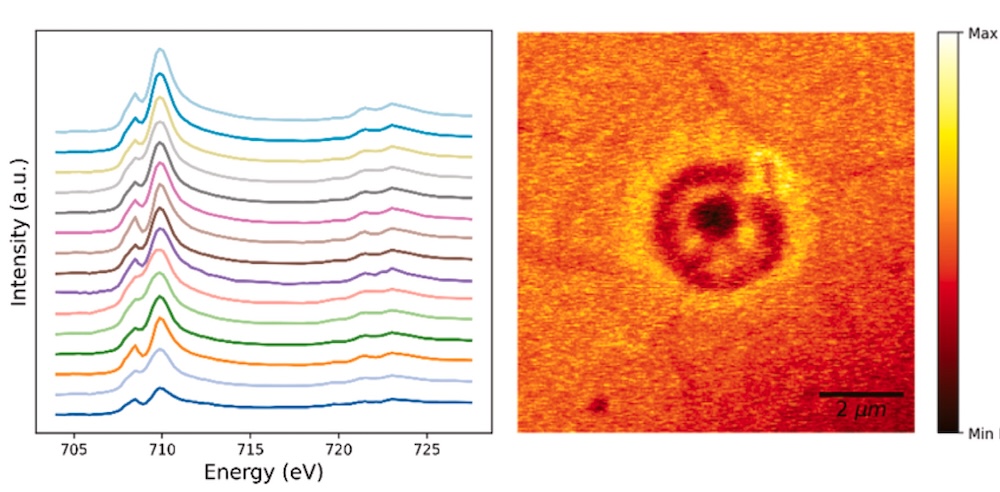
High-performance materials for hydrogen production

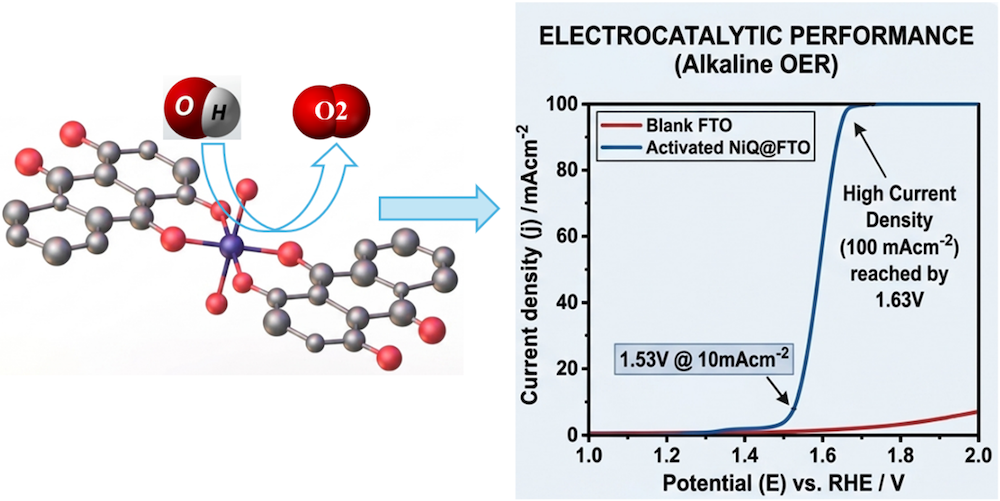
Investigating exsolution of metal nanoparticles is an area of evolving interest. Metal nanoparticles have been found to exsolve from metal oxides in the perovskite family under reducing conditions and investigated as fuel cell anodes. Professor Stephen Skinner works at the Department of Materials at Imperial College, and today spoke about the research his group has been carrying