Greenland and Antarctica are the world’s largest store of freshwater ice, with the potential to become the main drivers of sea-level rise. Subglacial water plays a key role in determining how the ice sheets slide over their bases, and hence how much ice is transported to regions where melting is enhanced.
At the base of glaciers and ice sheets, sufficiently large flows of water are observed to carve out channels, which are significant conduits of meltwater to the ocean. A new article recently published in the Journal of Glaciology and co-authored by Professor Neufeld investigates the evolution of the basal ice-water interface by analysing heat and fluid flow in idealised englacial channels.
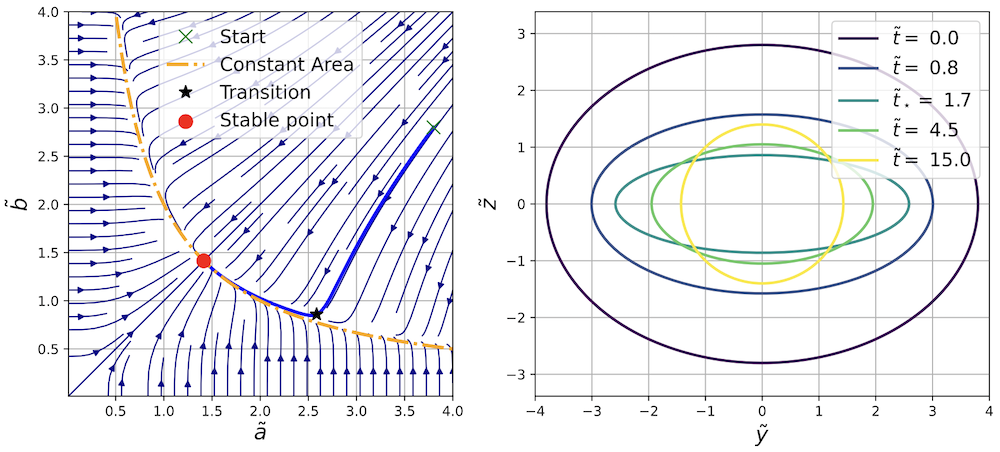
The paper studies the flow profiles of water through the channels and calculates how the distribution of melt around the ice-channel boundary is affected by the channel’s aspect ratio. The authors introduce a hybrid laminar-turbulent melt scheme that considers the Reynolds number of the flow in the channel. They also explore the stability of these channels in the laminar, turbulent and near-critical flow regimes.
You can read the full article here.