Novel Electrocatalysts for Hydrogen Production

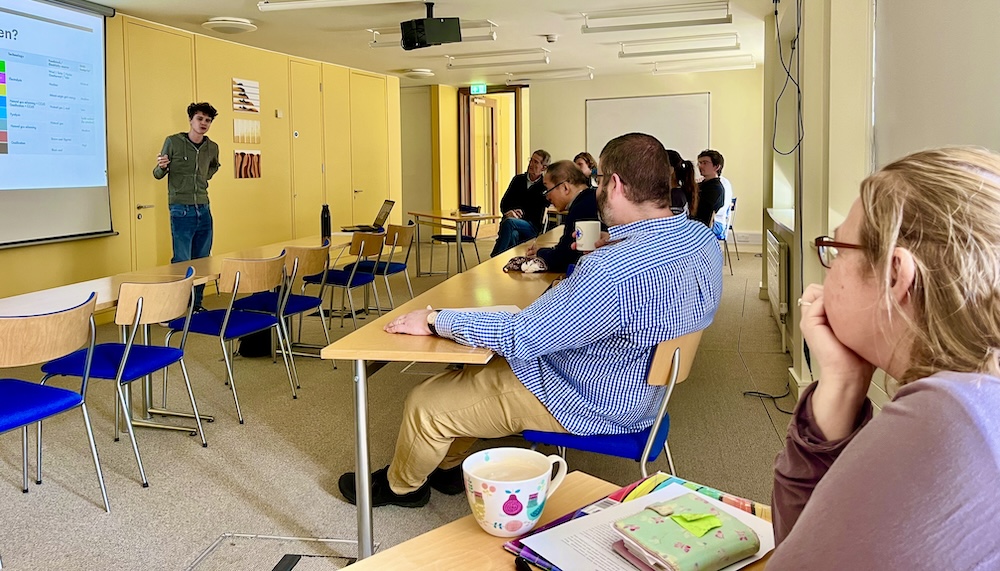
Today was the last seminar of Lent term, and Part III student James Fidler presented his recent work on new catalyst materials for hydrogen production through electrolysis.  Nobel metals are very expensive, and so research is ongoing to find affordable alternatives for catalyst production. Under the supervision of professor Clarke, James has been investigating the

Focus on Fluids: Dispersive mixing

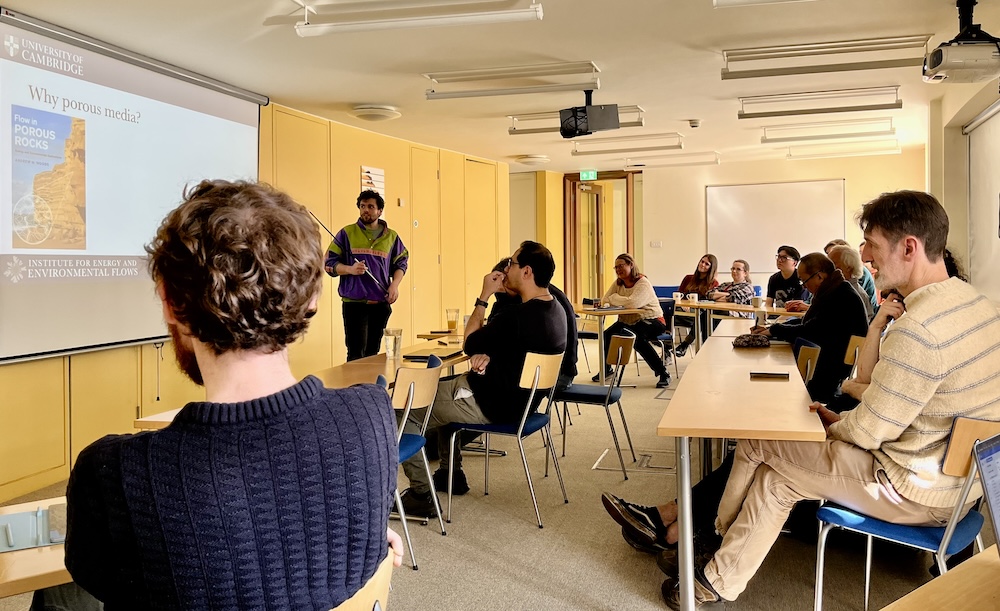
Professor Andy Woods was recently invited to write a short “Focus on Fluids” article for the Journal of Fluid Mechanics. The article reviews some of the processes leading to dispersion and mixing in porous media, and discusses recent findings and open questions in the field. The paper is now available online here. 

Aquifer thermal energy storage

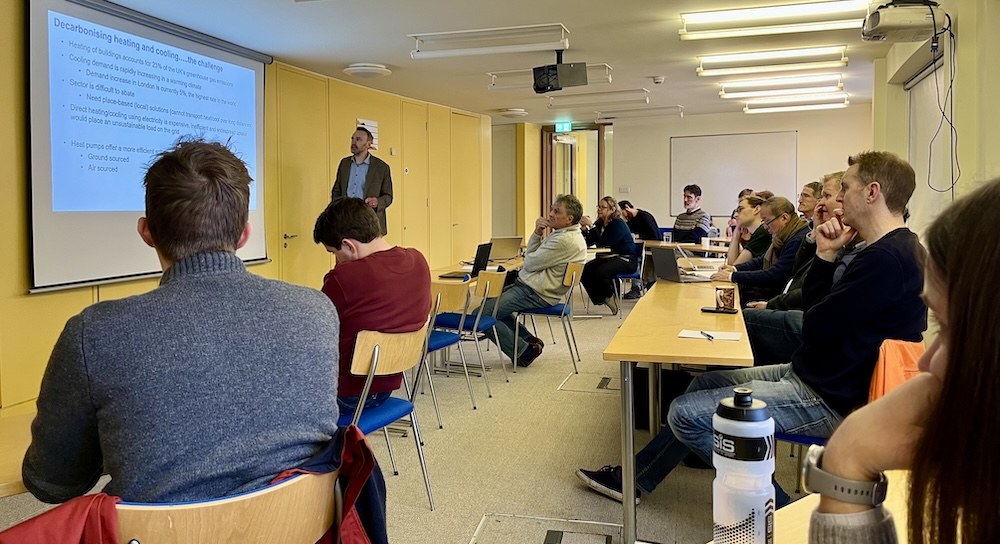
Professor Matthew Jackson from Imperial College London visited us today and presented his recent work on Aquifer Thermal Energy Storage (ATES) systems. This underground thermal energy storage technology provides large capacity, low carbon heating and cooling to the built environment. Heating and cooling of buildings currently produces 23% of the UK’s greenhouse gas emissions, and

Flows through reactive porous rocks

To celebrate his recent submission, PhD student Sam Clarke presented some of the results of his work at the weekly seminar today. During his time at the Institute, Sam has been working on reactive flows through porous rocks, with particular interest in the flows which develop around nuclear waste disposal sites. Nuclear waste items need

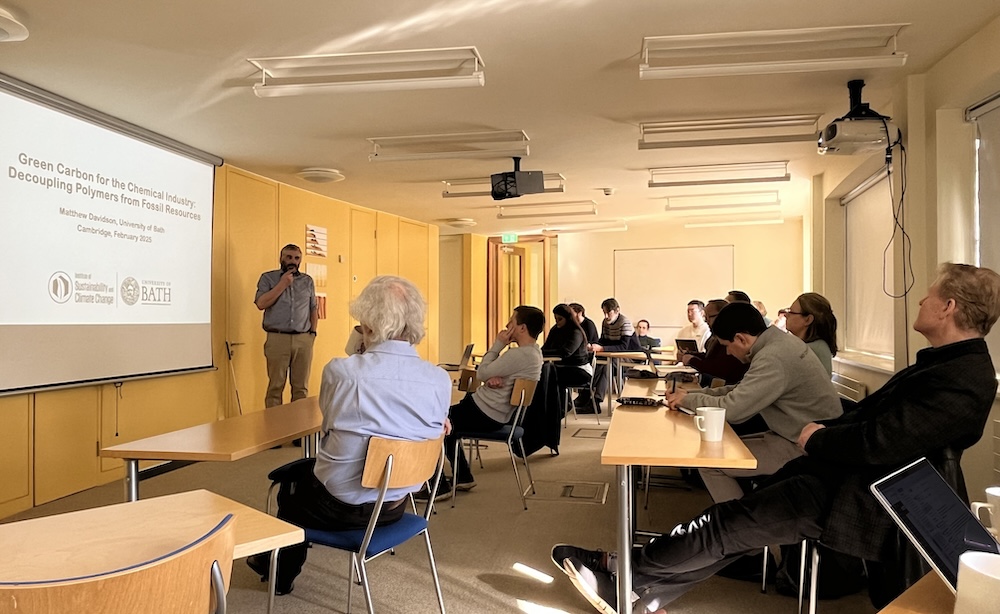
Decoupling polymers from fossil resources

Professor Matthew Davidson is the director of the Institute of Sustainability and Climate Change of the University of Bath. He visited us today and discussed some of the challenges in making the chemical industry more sustainable and less dependent on fossil resources.   Whereas decarbonisation of the energy sector is feasible through the development of

Bubble growth in electrolysis

Methane availability is crucial to the energy transition. Currently, most hydrogen is produced by steam methane reforming, a carbon-intensive process. A small amount of green hydrogen is being obtained from the electrolysis of water; however, for this carbon-free hydrogen to become prevalent, electrolysis must become much more efficient than it currently is. PhD student James

Interseasonal thermal energy storage

In temperate climates, many buildings need heating in winter and cooling in summer. A significant amount of energy can be saved by storing excess heat during the warmer months, and using it to warm up  a building in winter. Similarly, storing the wintertime thermal energy reduces the need for air conditioning during the summer. PhD

Collapsing non-spherical bubbles

Professor Daniel Fuster is the CNRS Research Director at the Institut d’Alembert, and works at Sorbonne University in Paris. He visited us today, and presented his recent work on the collapse of non-spherical bubbles. Professor Fuster’s work was motivated by some interesting laboratory observations. In the experiments, a pulse of laser energy is used to

Encapsulation of vitamin E

Encapsulation is used to deliver materials to specific sites, protect fragile materials from harsh external environments or to delay release of an active compound until a desired time. Mohammed Al Sharabi and professor Alex Routh have been working on an EPSRC-funded project looking at making novel encapsulated materials. The project was joint with the Universities