Interseasonal thermal energy storage

In temperate climates, many buildings need heating in winter and cooling in summer. A significant amount of energy can be saved by storing excess heat during the warmer months, and using it to warm up  a building in winter. Similarly, storing the wintertime thermal energy reduces the need for air conditioning during the summer. PhD

On the ventilation of a room

All buildings require ventilation to keep the indoor air fresh and clean. With underfloor air distribution, fresh air is supplied at a low level, while exhaust air is extracted from the top of a room. If the room contains a heat source, then a temperature stratification develops and occupants are surrounded by fresh air in

Periodic cycles of hydrogen storage 

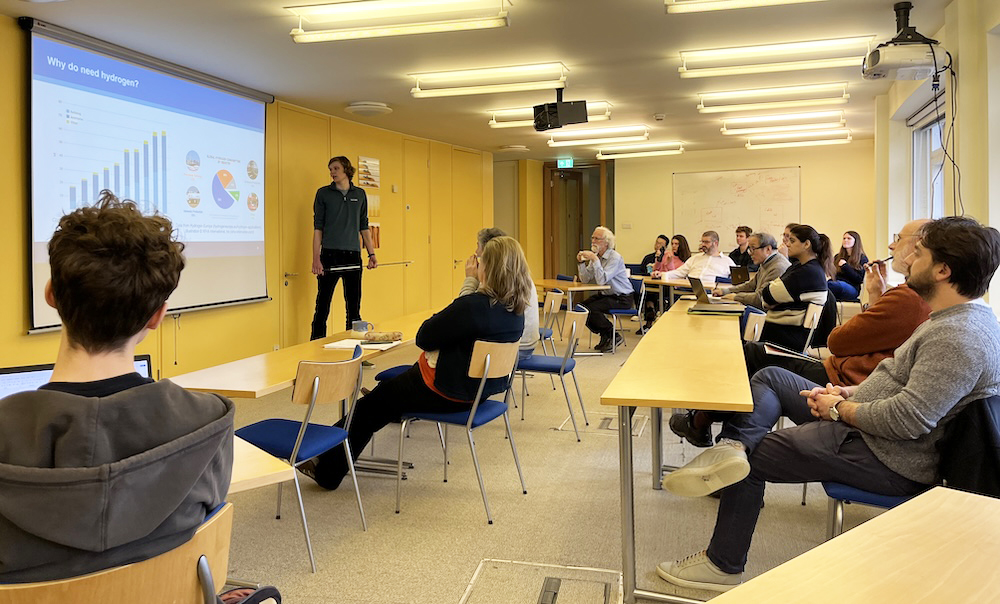
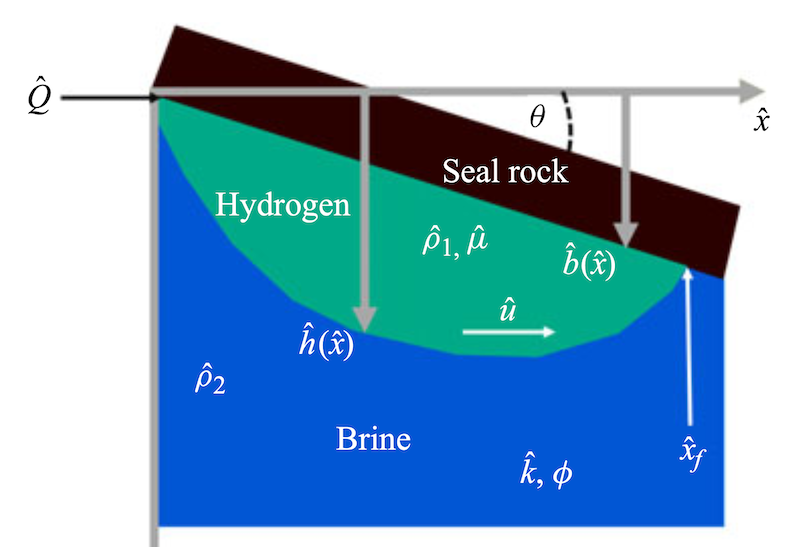
Renewable energy sources such as wind and solar are intermittent, and this leads to the need for substantial energy storage. At times of excessive generation, some of the renewable energy might be converted into hydrogen and stored underground. The hydrogen will then be recovered and used when the renewable sources produce insufficient energy.  A recent

First seminar of Lent term

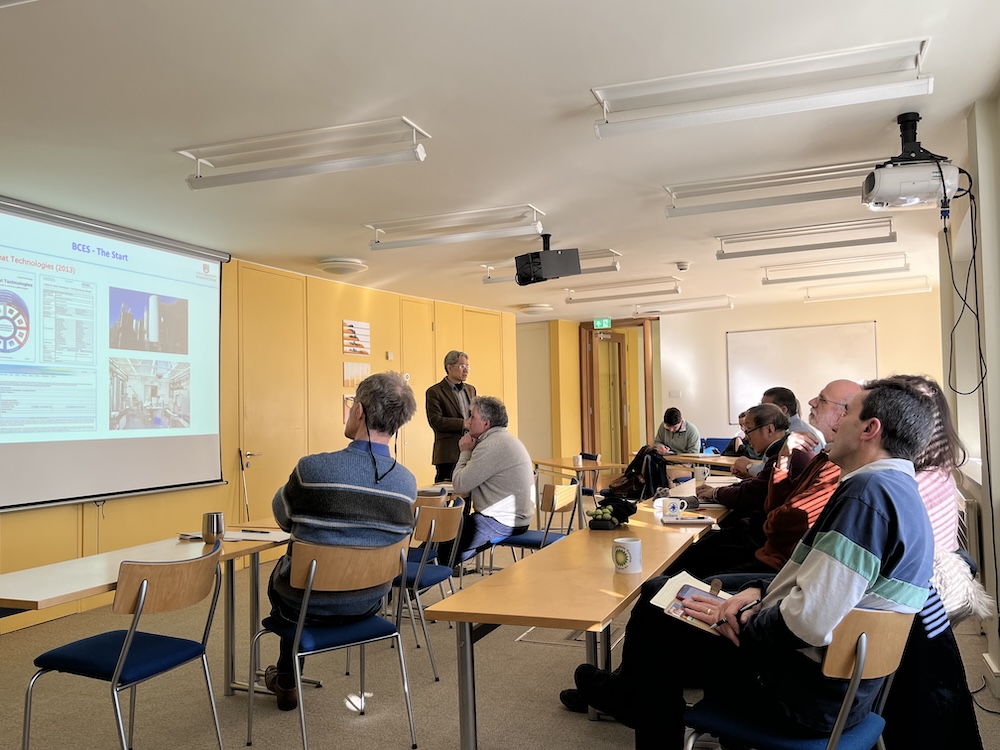
Professor Yulong Ding visited us from the University of Birmingham today, and gave the first seminar of Lent term. The title of the seminar was: “Multiphase Transport Phenomena and Energy Process Intensification”. He started by talking about a few energy storage techniques which have been developed by his group over the years, including liquid air

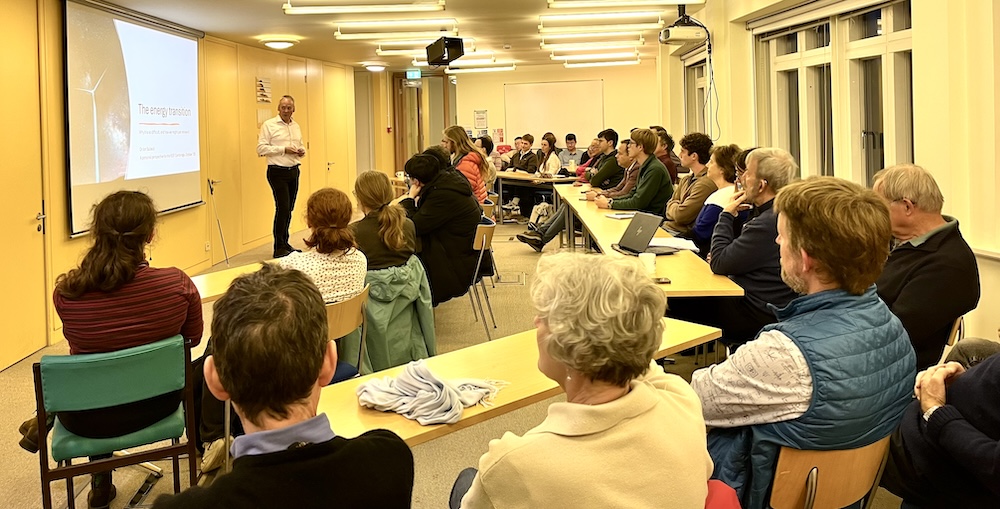
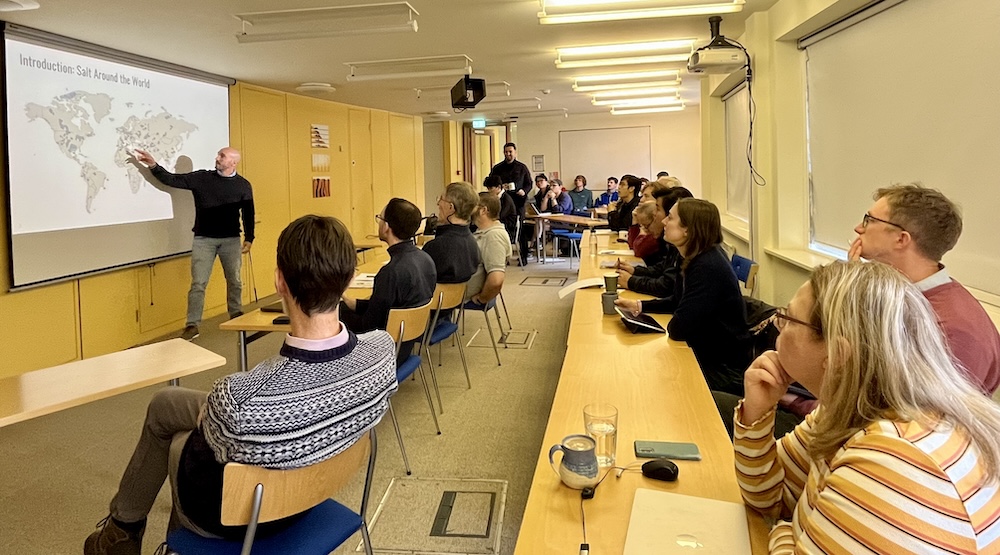
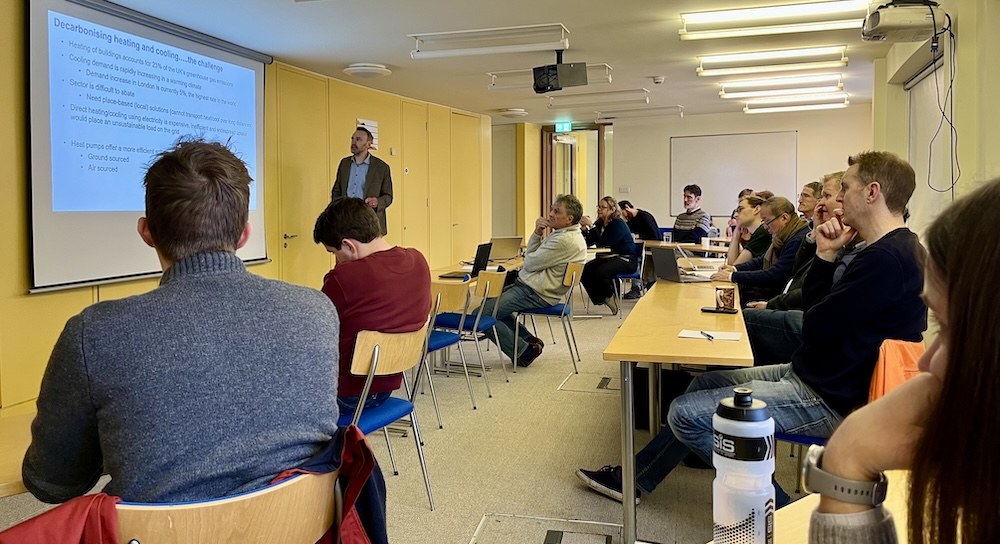
Cambridge Energy Masterclass 2024

On 9-10 December 2024 we hosted our annual Cambridge Energy Masterclass in the Centre for Mathematical Sciences. This very well-attended event offered an illuminating insight into the state-of-the-art understanding of many vital areas of the energy transition, with talks on everything from wind, solar, and nuclear power; to ammonia, hydrogen, and geothermal energy storage; to

Registration Open for 2024 Cambridge Energy Masterclass

The Cambridge Energy Masterclass is a two-day intensive meeting of lectures and discussions, with talks from leading experts in various aspects of energy demand and supply. It focuses on the energy transition and the technologies needed to optimist new energy systems. The Masterclass takes place at the Centre for Mathematical Sciences on Wilberforce Road. This

New Lecture Course

Head of Institute starts new ‘Energy Masterclass’ lecture series as part of the ‘Energy Technology’ course for Cambridge chemical engineering students On Friday 11th October Professor Andy Woods gave the first lecture of his new Energy Masterclass lecture series for students taking the part IIB Energy Technology course in the Department of Chemical Engineering and Biotechnology.

First Seminar of the Academic Year

Professor Andy Woods, Head of Institute, began our seminar series for Michaelmas term with a seminar titled ‘Fluid Mechanics Challenges of Large Energy Storage’. Andy began his talk by highlighting a simple yet crucial point: renewable energy supply is intermittent and energy demand is non-uniform, making energy storage innovations essential.  The talk then delved into