New experimental insight to limit corrosion in CCS plants

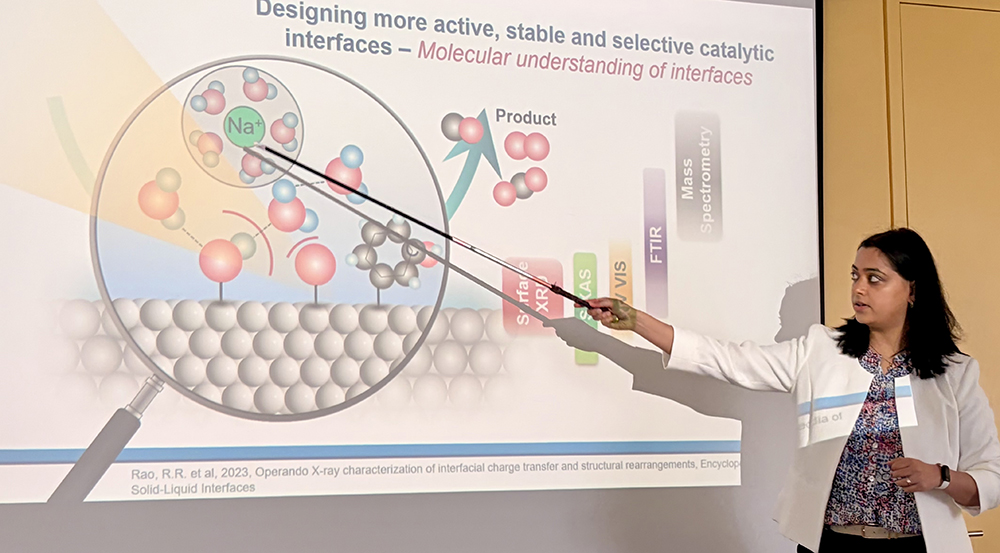
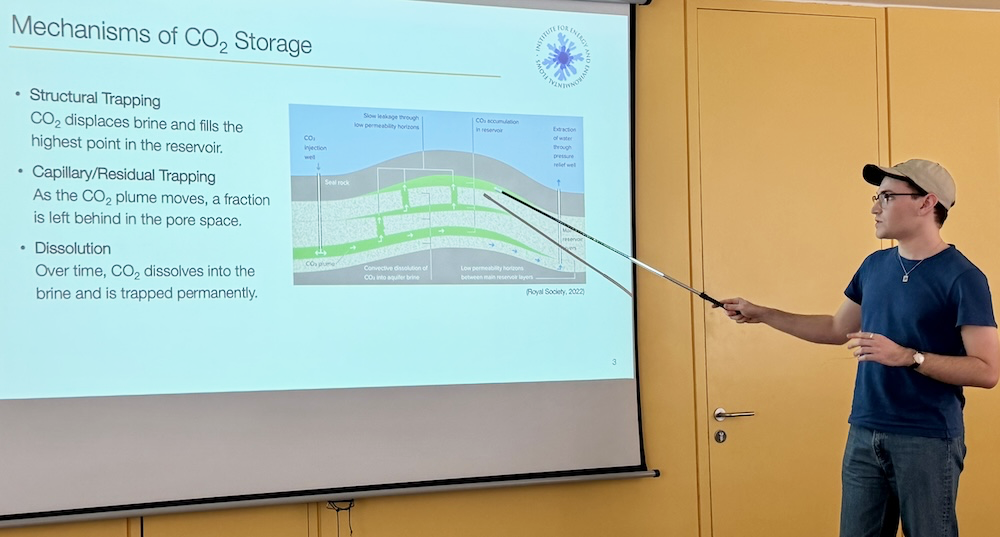
Carbon dioxide-induced corrosion of industrial equipment is very common, costly and particularly poses new challenges for Carbon Capture and Storage (CCS) systems. The role of impurities, such as SOx and NOx, which are also present in the stream, can also be important and has been discussed recently (cf. Corrosion Science, vol. 236, August 2024).  A

PhD project on Tidal Power

A new PhD project, fully funded, was advertised for a physical scientist, engineer or mathematician to explore the potential of tidal barrages as a means to generate a reliable source of renewable energy. An offer has now been made to one of the candidates who applied. A particular focus of the work will be the

From IEEF to the mining and energy industries

Jason Furtney was a student at the Institute in the early 2000s, after studying geology at Edinburgh University. Since then, he has been working as a consulting engineer for Itasca International, a geomechanics consulting and software company in Minneapolis, Minnesota. Today, Jason was back in Cambridge and gave a special seminar at the Institute. He

Summer garden party: congratulations Marie!

A Summer Garden Party & Hog Roast was held at the Bullard Labs on Thursday 19 June to celebrate Marie Edmonds’ election to the Royal Society. Marie has also recently been chosen as the new Head of the Department of Earth Sciences. This was a lovely evening, with plenty of food, flowers and smiles. Thank

Celebrating 25 years at the University

On Monday 9 June, an event was held at the University to celebrate members of staff who have been in Cambridge for 25 years. The event was attended by the Vice Chancellor, Professor Deborah Prentice. Several members of the Institute were among the smiling participants, including Catherine, Lotty, Jie and Andy. Congratulations to all!

Coastal upwelling in lakes

Large lakes tend to be thermally stratified, with a layer of relatively warm water near the surface, and a deeper layer of colder water underneath. The temperature of the surface water fluctuates over the year, while the temperature of the deeper water remains more stable: hence, the thermal stratification is strongest during the summer, when

Plumes in a turbulent cross-flow

During the second part of today’s seminar, MPhil student James Sear presented the results of his new experiments on turbulent plumes in a cross-flow. During the last few months, James has been studying what happens when a steady flux of contaminants are released into a river: the contaminants are transported by the current, while being