Celebrating 25 years at the University

On Monday 9 June, an event was held at the University to celebrate members of staff who have been in Cambridge for 25 years. The event was attended by the Vice Chancellor, Professor Deborah Prentice. Several members of the Institute were among the smiling participants, including Catherine, Lotty, Jie and Andy. Congratulations to all!

Coastal upwelling in lakes

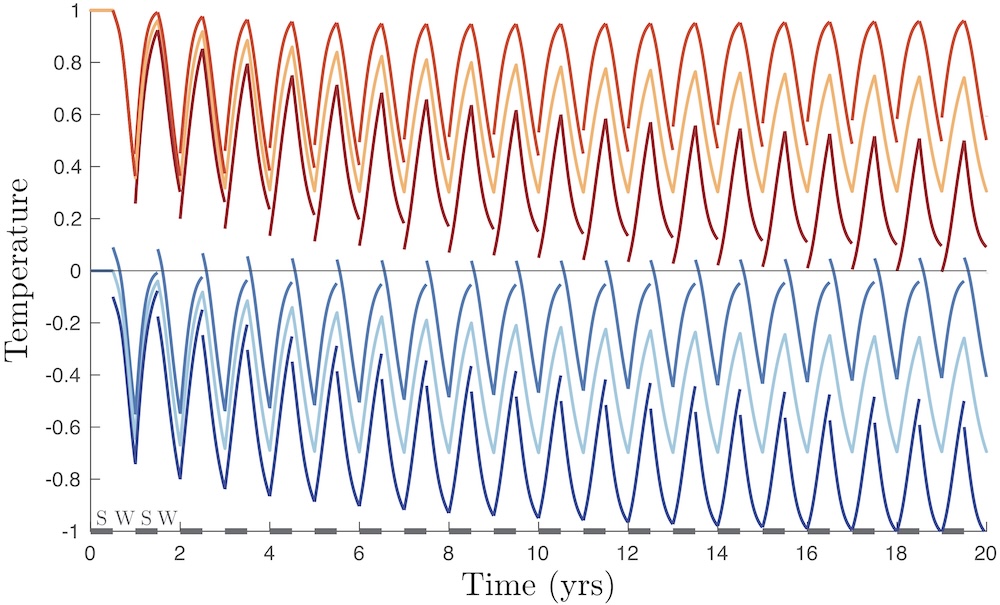
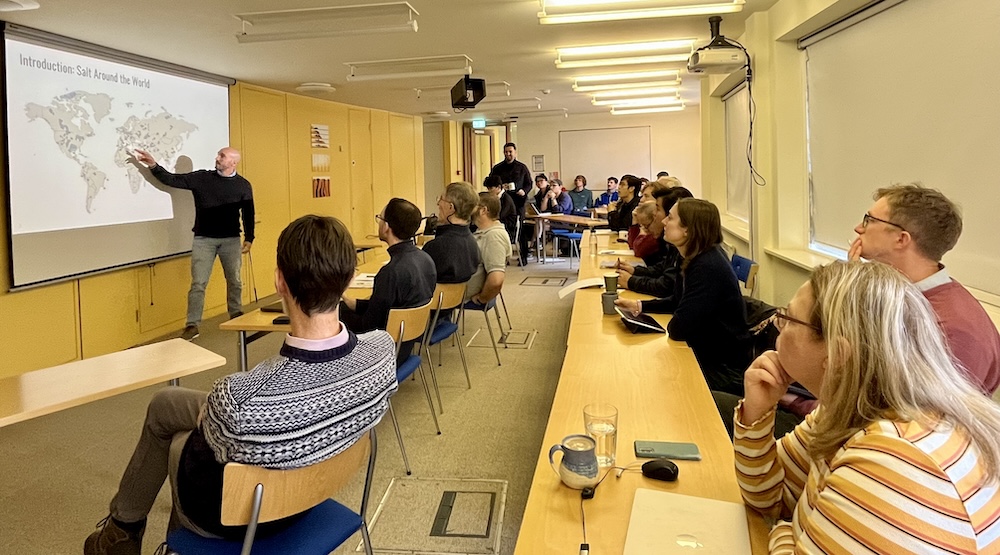
Large lakes tend to be thermally stratified, with a layer of relatively warm water near the surface, and a deeper layer of colder water underneath. The temperature of the surface water fluctuates over the year, while the temperature of the deeper water remains more stable: hence, the thermal stratification is strongest during the summer, when

Plumes in a turbulent cross-flow

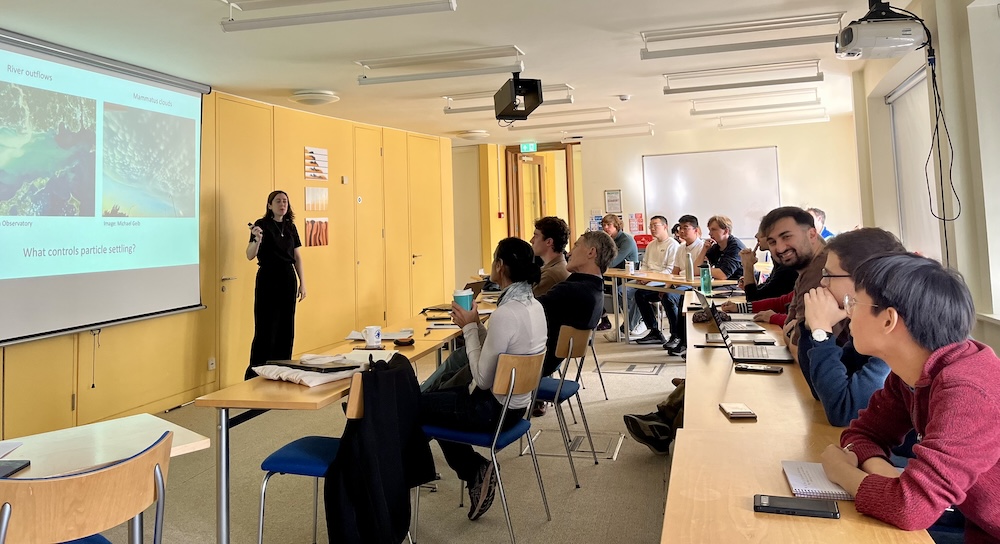
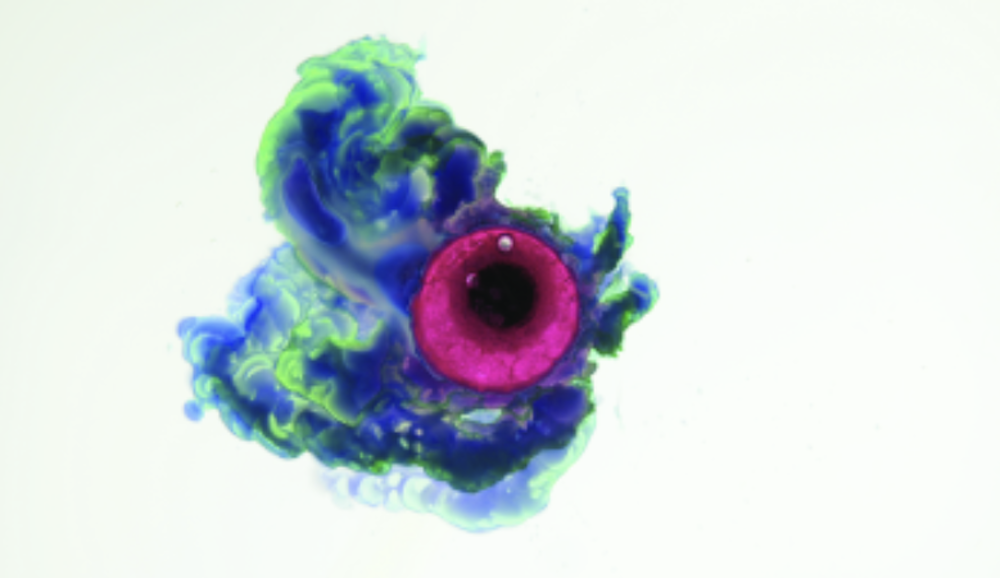
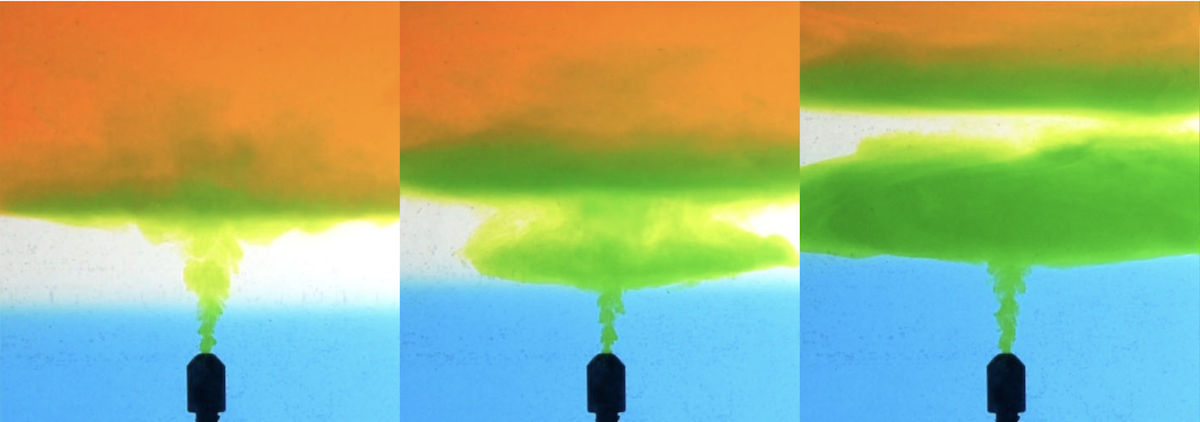
During the second part of today’s seminar, MPhil student James Sear presented the results of his new experiments on turbulent plumes in a cross-flow. During the last few months, James has been studying what happens when a steady flux of contaminants are released into a river: the contaminants are transported by the current, while being

Efficiency of carbon storage in aquifers

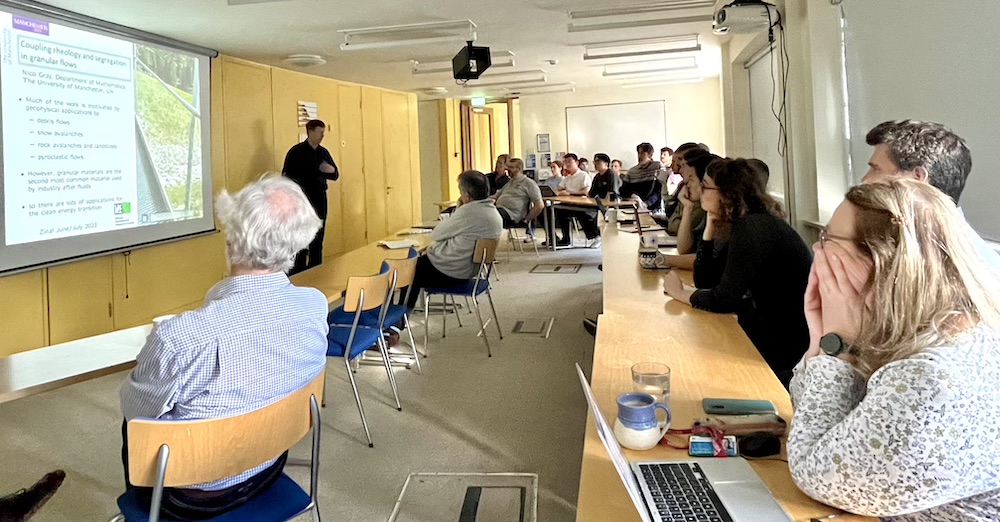
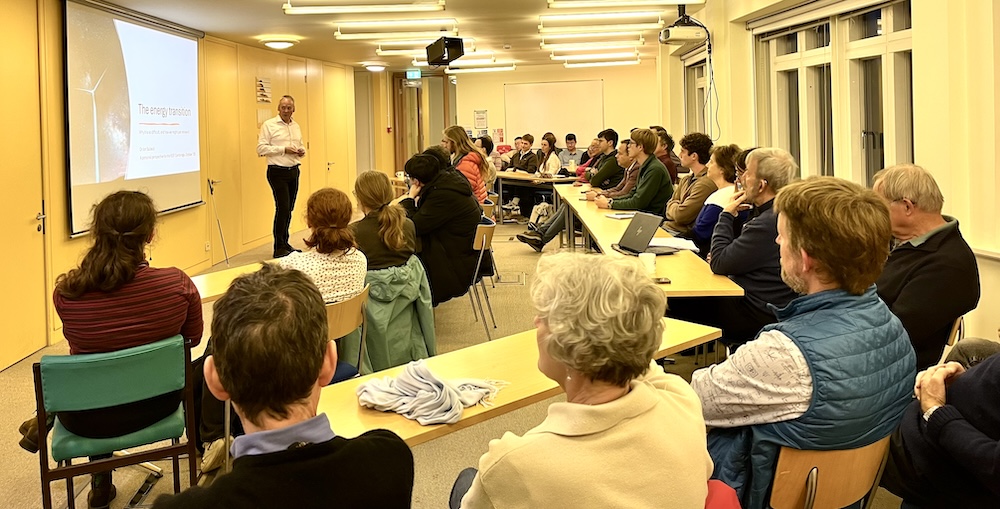
During the first part of today’s seminar, PhD student Ross Shepherd presented some of his recent work on the injection and storage of CO2 into underground aquifers.  Carbon capture and storage will be required as one of many technologies in the global energy transition, and Ross has been studying how to optimise the injection of

Poorya Shaghaghi awarded the Mellon bursary

Clare Hall PhD student Poorya Shaghaghi has recently been awarded a Mellon bursary by his College. This award is given by Clare Hall to up to four students, based on academic merit. Poorya joined the Institute during Easter term, and is now working under the supervision of professor Woods. His research focusses on the ventilation

Primary school children visited the Flow Labs

On Tuesday 20 May, 60 Year-4 children from our local primary school visited the Earth Sciences department. They explored different volcanic processes and new technologies for the energy transition in the IEEF Flow Labs, and discovered fossils from the chalk sea that covered Cambridge 90 million years ago at the Collections Research Centre.

Early cancer detection using nanoparticles

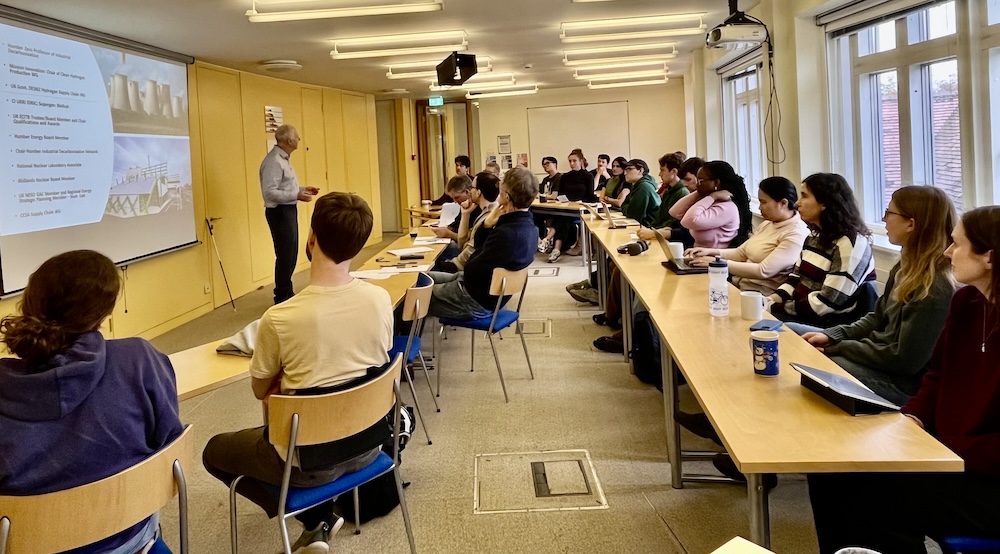
Professor Ljiljana Fruk has been studying the design principles and biomedical applications of organic and hybrid nanomaterials. These can be used for real-time detection of senescent cells in the body.  Large concentrations of senescent cells in an organ might be a precursor to cancer, and so detecting these cells in the body might help early

Local ionic conditions conducive to Parkinson’s disease

Parkinson’s disease is linked to the aggregation of the intrinsically disordered protein α-synuclein (aSyn), but the precise triggers and mechanisms driving this process remain unclear. Local environmental factors, such as ion concentrations, can influence aSyn’s tendency to aggregate.  A team of researchers including professor Alex Routh have explored how physiologically relevant ions, mainly Ca2+ and